
Renewing Your Passport When You Live Overseas
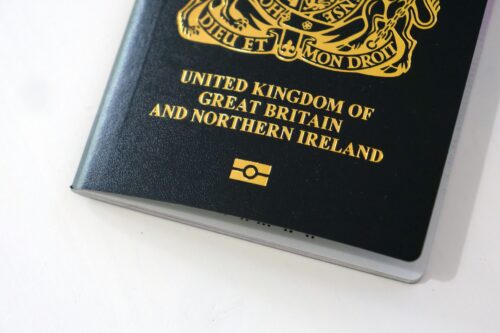
A friend of mine moved to Lisbon a couple of years ago and didn’t think about her passport once. Then an airline agent in Porto flipped to the photo page, did some quick mental maths, and told her she couldn’t board. Her passport was valid for another four months. Four months, it turned out, wasn’t enough.
If you live overseas, or you’re the kind of traveller who stays somewhere long enough to get a library card and a favourite coffee spot, the passport problem hits you differently than it hits everyone back home. At home you fill in a form or book an appointment, hand over your paperwork, and wait. Abroad the same errand becomes a logistics puzzle: foreign mail, a consulate that might be in another city, and a document you literally cannot travel on while somebody else is holding it.
None of this is hard to get ahead of. It just has to happen before it becomes a missed flight.
Your real deadline is six months before the expiry date
Most countries won’t let you enter unless your passport is valid for at least six months beyond your arrival date. Some want three months. A handful only care that it’s valid on the day you land. You usually don’t find out which rule applies until you’re at the gate, and airlines enforce the strictest version, because they’re the ones fined if they fly you somewhere you’ll be turned away.
So the deadline that counts sits six months before the expiry date, not on it. Cross that line and whole regions quietly close to you while your passport still reads valid. Go find it now and check. If you’re already inside that six-month window, or you’ll be inside it before your next trip, the clock started without you.
Why a postal renewal from abroad stretches into weeks
Back home a postal renewal is annoying but predictable. From overseas the delays pile on top of each other. Your application has to physically travel to your home country’s passport office and back, often across an ocean, and international post is neither fast nor reliable for something this important. Since almost nobody will send their only passport through regular mail, you’re paying for tracked courier both ways too. And the processing clock often doesn’t even start until the office has your documents in hand, so transit time gets added to the quoted turnaround rather than hidden inside it.
Add it up. A “routine” renewal advertised at a few weeks of processing can eat a month or more of your calendar once the post is included. Fine if you’re planning a year out. A real problem when a family emergency or a work trip drops on you and you need to be on a plane in two weeks.
Renewing without flying home
Flying back to renew is almost never actually required, which surprises people. Most countries run overseas renewals through their embassies and consulates, or through a central office you deal with by post. The trouble is the standard route assumes you planned ahead, and that assumption is useless when you’re in a hurry.
If you’re a British citizen abroad
British passport holders are their own case. HM Passport Office no longer runs overseas counters, so everything routes back to the UK. Standard renewals go through HM Passport Office by post and can run to several weeks. That’s manageable when you’ve got months of runway and genuinely painful when a work crisis or a sick relative means you needed to travel yesterday. ASAP Passports is a UK service that helps British citizens abroad renew a UK passport from overseas, handling urgent renewals and replacements, plus first-time applications, couriered through DHL Express so you never have to fly home to lodge the application. For eligible adult renewals it works to a two-week turnaround, which is the kind of buffer worth knowing about before you book anything non-refundable.
Two caveats if you go this way. The two-week timeline covers straightforward adult renewals, so child applications, name changes, replacements and first-time passports can take longer and ask for extra documents. And whatever service you use, you’ll still need a compliant digital photo, because the UK’s photo rules are strict and a rejected photo is the single most common reason an otherwise clean application stalls.
How it works, passport by passport
The exact process hangs entirely on which passport you hold, so here’s the short version for the common cases.
In the United States you renew through the embassy or consulate serving where you live, not by walking into a post office. Routine service runs several weeks plus mailing, and you surrender your old passport during processing, which is worth planning around if you’ve already booked travel. Got an urgent, documented trip? Consulates can sometimes expedite, but you’ll need proof and there’s no guarantee.
Canadians abroad apply through the nearest Government of Canada office, and processing times swing a lot by location. If you’re somewhere without a big consular presence, build in extra weeks.
Australia and New Zealand both handle overseas renewals through their embassies, and for many countries let you start the bulk of the application online before you post or present your documents. Photo and witness requirements are where people come unstuck, so read the instructions for your actual country of residence instead of assuming they match home.
EU citizens living in another member state generally deal with their own country’s embassy, and the processes differ enough between states that no single rule holds. Check your foreign ministry’s page for the consulate covering your city.
Before you fill in a single form
A few things to sort first, roughly in order:
1. Check your expiry date, subtract six months, and treat that as your real deadline. 2. Work out whether you’ll be without your passport during processing, and make sure nothing’s booked in that window. 3. Get your photo done to your country’s exact spec early. A rejected photo is the one thing most likely to stall you. 4. Pull together your supporting documents, because name changes and children’s applications both want extra paperwork and extra time. 5. Then decide: standard consular route, or a managed express service, based on how much runway you’ve actually got.
So what would I actually do
Three or four months before you travel, the standard consular or postal route is cheaper and perfectly fine, and there’s no reason to pay for anything faster. The moment your window shrinks to a couple of weeks, the maths flips, and knowing your options in advance is what keeps a paperwork problem from turning into a cancelled trip.
Here’s a habit worth stealing: set a reminder in your calendar for nine months before your passport expires. Sounds like overkill right up until the one time it spares you a frantic week and a very expensive courier bill.