
Can’t Get A Dollar Account From Your Bank? 3 Alternatives Compared For 2026

If your local bank won’t open a dollar account, your three realistic alternatives are a multicurrency fintech account with USD details, a non-resident account at an international bank, or a USD stablecoin account with a card. Fintech accounts suit freelancers whose address qualifies for USD receiving details, non-resident accounts suit savers who can meet a bank’s entry threshold, and stablecoin accounts suit people who mainly need to hold and spend dollars when the first two routes are closed to them.
Each route holds a different kind of asset, carries different protections and sets its own eligibility rules.
This guide compares them side by side and uses the United Arab Emirates as a worked example, because it is one of the countries where a widely used fintech route to USD account details is closed.
Key takeaways
- Wise’s help page lists the UAE among more than 30 locations where an address blocks USD account details.
- HSBC Expat lists an entry route of GBP 75,000 in savings or investments, plus a separate route for existing HSBC Premier customers with at least GBP 10,000.
- Stablecoin balances are not bank deposits, and any yield paid on them is variable.
- The blockchain fee is usually the smallest part of a stablecoin transfer; converting money in and out tends to cost more.
- Pick a route by what the dollars must do: be saved, receive client payments or be spent.
What can you do if no local bank will open a dollar account?
You can hold dollars outside your local banking system through a fintech that issues USD account details, an international bank that serves non-residents, or a stablecoin account that holds dollar-tracking tokens.
Which one works for you depends on your address, your balance and the job the dollars need to do.
Start with the job the dollars need to do
Most people outside the US who want dollars need them for one of three jobs. The first is saving: keeping part of their wealth in a currency that is not their local one.
The second is receiving: getting paid by clients or platforms that pay in USD. The third is spending: paying for things abroad, or at home, from a dollar balance.
An account that handles one job well can fail at another. A stablecoin card can work well for everyday spending, yet a client’s accounts team may only be able to pay into conventional account details.
A non-resident account can hold savings comfortably, yet its entry threshold may be far above what a freelancer has on hand.
Write down which of the three jobs matters most before comparing providers. It saves time, because it rules out options that look attractive but cannot do the one thing you need.
Check eligibility before features
Eligibility is the first filter, and it is usually tied to more than one factor. Providers check where your address is, sometimes your nationality, whether the profile is personal or business, and in some cases how much money you can bring.
These rules change, and they are set out on each provider’s own help or eligibility pages. Reviews and comparison sites, including this one, can fall behind.
Before you give payment instructions to a client or move savings, open the provider’s current page and confirm that your situation is covered.
Count the full cost from funding to payout
A dollar route can cost money at five points: when you fund it, while you hold the balance, when you move money, when you convert it, and when someone cashes it out. Membership or maintenance fees are only one of these.
The World Bank’s Remittance Prices Worldwide database puts the global average cost of sending money at 6.36% of the amount sent, based on its September 2025 report covering the third quarter of 2025.
That figure is an average for sending USD 200 across many providers and corridors. It is a benchmark, not a quote for your own transfer.
Stablecoin transfers have their own cost structure. An October 2026 IMF working paper, “Deconstructing the Stablecoin Sandwich”, estimated the average cost of sending USD 200 through stablecoins at 2.18%.
Blockchain transfer fees made up 0.48 percentage points of that, less than a quarter of the total. Crypto exchange trading fees (0.85 points) and conventional currency deposit and withdrawal charges (0.67 points) were larger.
The practical lesson is simple. A low network fee does not make the whole payment cheap. Ask for a quote that covers every step, from the currency you start with to the currency your recipient can actually use.
Option 1: Multicurrency fintech accounts. Who can get USD details?
A multicurrency fintech account can give you USD receiving details that clients pay into like a normal US account, but only if your residential address and profile qualify. Some fintechs exclude whole countries from this feature, so check your address against the provider’s list before you rely on it.
How USD receiving details work
USD account details let a client or platform send you dollars as a conventional transfer. To the payer, it looks like paying any other dollar account. To you, the money arrives in a dollar balance that you can hold, convert or spend.
For freelancers, this matters because many clients and marketplaces only pay into conventional account details. They will not send stablecoins, and their finance teams may not be set up to try.
Wise
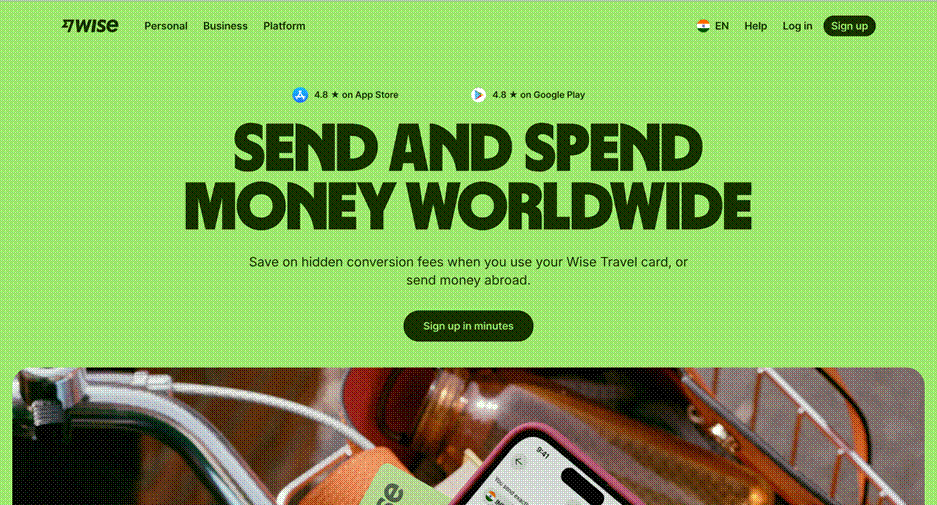
Best for: freelancers and remote workers whose address is outside Wise’s exclusion list and who want to give clients conventional USD transfer details.
Wise is a multicurrency account that can issue USD account details, but access depends on where your address is.
Its help page, checked in November 2026, says USD account details are not available for personal profiles with an address in several countries, and the United Arab Emirates is on that list.
The same list includes Bangladesh, Nigeria, Pakistan, Sri Lanka and Türkiye, and business profiles face extra rules. Your address must also be in a country where Wise lets you open a currency account in the first place.
- What you get: multicurrency balances, with USD account details where your address qualifies
- Who can get USD details: personal profiles with an address outside the exclusion list
- UAE status: USD account details not available (Wise Help Centre, checked November 2026)
- Main trade-off: the feature many freelancers need most depends on residence
Where this option falls short
The exclusion list is the main limitation. A UAE resident, for example, can’t plan on receiving client payments through Wise USD details, even though Wise remains a familiar name for other transfers.
The restriction applies to one feature, not to everything a provider offers. Read it that way: if you are on the list, look for another route to receive dollars, rather than assuming the whole service is closed to you.
Option 2: Non-resident accounts at international banks
A non-resident account is a conventional bank account held outside your country of residence, and it suits people who can meet the bank’s entry criteria.
Those criteria are often financial, so this route works best for savers with a substantial balance.
What a non-resident account is
International banks run offshore or expat units that open accounts for people living abroad.
The account sits in the bank’s chosen jurisdiction, and the rules of that jurisdiction decide things like deposit protection.
This route gives you cash in a deposit account, which is different from holding tokens. It also tends to come with a higher bar to entry than a fintech app.
HSBC Expat
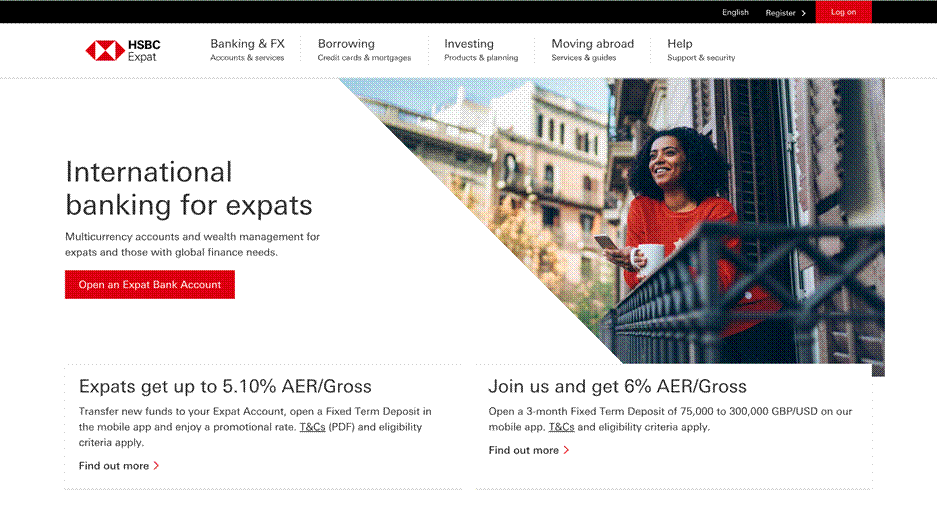
Best for: savers with at least GBP 75,000 who want a conventional account held offshore.
HSBC Expat offers an account held in Jersey, Channel Islands, for people who live or work abroad. Its account page, checked in November 2026, lists two routes in: GBP 75,000 in savings or investments, or being an existing HSBC Premier customer with at least GBP 10,000 to save or invest with HSBC Expat.
Applicants must also live in an eligible country. Accounts are available in GBP, EUR or USD.
- What you get: a conventional account in GBP, EUR or USD, held in Jersey
- Who can open it: residents of eligible countries who meet one of the two financial routes
- Deposit protection: the Jersey Bank Depositors Compensation Scheme, covering eligible depositors up to GBP 50,000
- Main trade-off: the entry threshold is high for most freelancers
Where this option falls short
Meeting the financial threshold doesn’t replace the rest of the application. Banks still run their own checks on identity, residence and source of funds.
Deposit protection also depends on where the account is held. HSBC Expat’s page notes that the Jersey scheme applies, and that UK and Hong Kong schemes do not. Check the protection rules for any non-resident account before treating it as a home for savings.
Option 3: USD stablecoin accounts with a card
A USD stablecoin account holds tokens designed to track the dollar, and a linked card lets you spend that balance in everyday shops.
It is the most widely open of the three routes, but you hold tokens, not cash in a deposit account.
What you actually hold
A dollar stablecoin is a digital token designed to keep a stable value against the US dollar. That design does not guarantee it will always be worth exactly one dollar.
Two trade-offs matter most. First, stablecoin balances are not bank deposits, so deposit protection schemes do not cover them. Second, where a provider pays a yield on the balance, that yield is variable and can change or stop.
Receiving tokens is also different from receiving a bank transfer. Before you share stablecoin payment details with a client or employer, confirm that they can send the specific token on the specific network your account supports.
Plasma
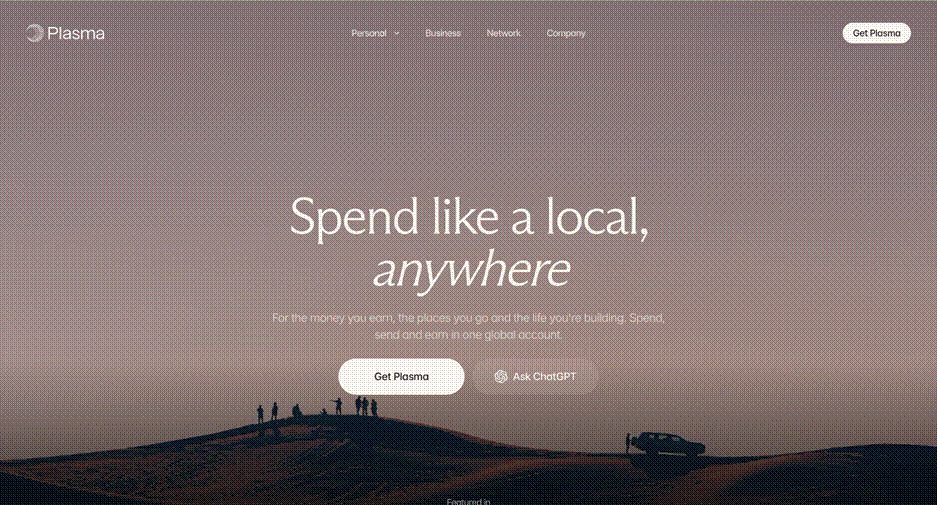
Best for: UAE residents who want a USD stablecoin account with a Visa card when a local USD account is not on offer.
Plasma is a stablecoin card and account; its product is called Plasma One. Plasma One combines a stablecoin account with a Visa card, so a dollar-tracking balance and everyday card spending sit in one app.
It is available to UAE residents, which makes it relevant for people whose address rules them out of fintech USD account details. Yield on the balance varies by member tier, so compare the tiers before choosing one.
- Product: Plasma One, from Plasma
- What you get: a stablecoin account and a Visa card
- Availability: open to UAE residents
- Yield: varies by member tier
Bleap
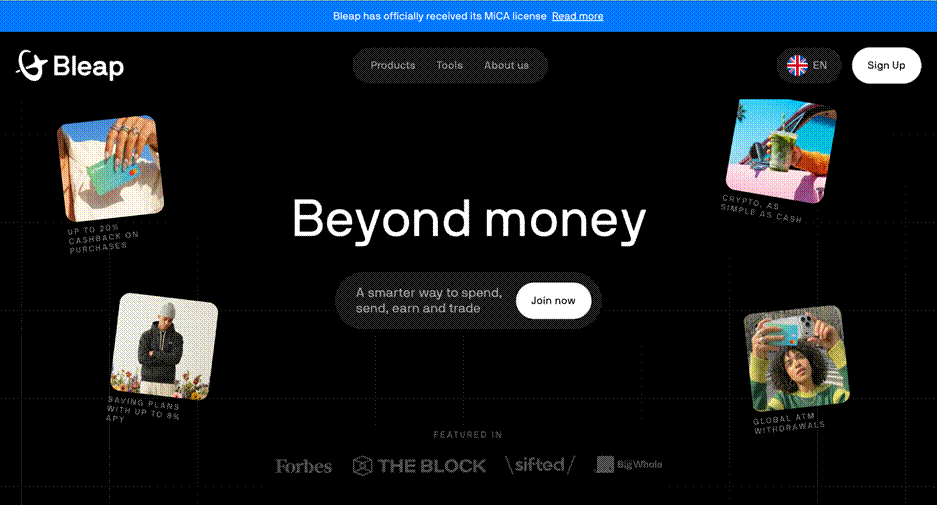
Best for: residents of the EEA and Latin America who want a crypto card with low card fees and a USD savings vault.
Bleap offers a crypto card alongside USD savings vaults. Its card page, checked in November 2026, lists no issuance, monthly or maintenance fees, a 0% FX markup on international transactions and cashback of up to 20%, paid in USDC.
USD savings vaults show rates of up to 3.83% AER. The card is currently available to residents of the European Economic Area and Latin America, and the page does not list which Latin American countries are included.
- What you get: a crypto card, USDC cashback and USD savings vaults
- Who can open it: residents of the EEA and Latin America (card page, checked November 2026)
- ATM access: free withdrawals worldwide up to EUR 400 a month
- Main trade-off: no access for residents outside the listed regions
KAST
Best for: frequent card spenders who hold several dollar stablecoins and want tiered cashback.
KAST offers stablecoin-funded Visa cards in three tiers. Its cards page, checked in November 2026, lists Standard (free), Premium (USD 1,000 a year) and Private (USD 10,000 a year).
Cashback is 1.5%, 2% and 3% by tier, earned on eligible spending up to monthly caps of USD 2,000, USD 10,000 and USD 40,000. Reserve rates are 8%, 10% and 12% by tier, and that offer ends on 1 July 2027.
- What you get: a Visa card funded by stablecoins, with cashback and Reserve rates by tier
- Supported stablecoins: USDT, USDC, PYUSD and RLUSD, with networks that differ by coin
- Who can open it: availability varies by jurisdiction, so check during sign-up
- Main trade-off: the highest rates sit behind annual fees of USD 1,000 or USD 10,000
How to send and receive stablecoins safely
The same token can exist on several blockchains. USDT and USDC, for example, run on networks including Ethereum, Solana, Polygon, Arbitrum and TRON.
Sending a token on a network the receiving account does not support can mean losing the funds.
Before any transfer, follow four steps:
- Confirm the exact token and network the recipient’s account accepts.
- Copy the destination address directly and check it before sending.
- Get a quote that includes conversion at both ends, not only the network fee.
- Send a small test amount, confirm it arrived, then send the rest.
Blockchain transfers generally can’t be reversed by a provider once they are confirmed. The test payment is the cheapest protection you have.
Risks to weigh
A stablecoin can trade below its reference value, an event known as a depeg. If you need to sell or redeem during a depeg, you may receive less than one dollar per token.
Access is another risk. An app outage, a provider failure or a change in eligibility can interrupt access to money you need for rent or bills. Keep an emergency buffer somewhere else.
Tax is the third. In the UK, HMRC lists using tokens to pay for goods or services among its examples of a disposal for Capital Gains Tax.
Card spending from a token balance can therefore create records you need to keep. Other countries set their own rules, so check how yours treats stablecoin spending.
Which option fits what you need the dollars for?
Match the route to the job: non-resident accounts for saving, fintech USD details for receiving client payments where your address qualifies, and stablecoin accounts with a card for spending when other routes are closed. Check eligibility first, then compare costs and rewards.
Saving
A non-resident bank account holds cash under the rules of its jurisdiction. HSBC Expat, for example, points to Jersey’s compensation scheme for eligible deposits up to GBP 50,000.
A stablecoin account holds tokens designed to track the dollar, and the balance is exposed to depeg and provider risk.
Treat the two as different assets rather than interchangeable savings accounts, and weigh any variable yield against those risks.
Receiving client payments
If your address qualifies, fintech USD account details are the simplest route, because clients can pay as they would pay any dollar account. Check the exclusion list first: a personal profile with a UAE address, for example, can’t get Wise USD details.
A non-resident bank account is another way to receive conventional transfers, if you meet the entry criteria.
For stablecoin payments, confirm that the client can send the token and network your account supports, and that your contract allows payment in tokens.
Spending abroad
A stablecoin account with a card lets you spend a dollar-tracking balance at shops that accept the card. For UAE residents who can’t get fintech USD details, Plasma One is the option in this guide built for that case: a stablecoin account and a Visa card in one app.
Whether residents of your country can apply is a separate question from where the card is accepted. A card that works in many countries still has to be open to applicants where you live.
Sending money home or paying rent
Many recipients need local currency in a bank account or as cash, not tokens. Before choosing a route, ask what form your landlord or family can actually use, and price the full journey to that form.
For a closer look at how crypto compares with banks and transfer apps for this job, see this guide to sending money home as an expat and where crypto fits in.
A worked example: a freelancer based in the UAE
Take a designer living in Dubai who invoices two clients in USD and wants to keep part of her income in dollars. Her local bank won’t open a dollar account for her, so she works through the three routes in order.
First, she checks fintech USD details. Wise’s help page lists the UAE among the addresses that can’t get USD account details, so that route is closed for her personal profile, whatever else the app offers.
Second, she checks a non-resident account. HSBC Expat’s routes start at GBP 75,000 in savings or investments, or GBP 10,000 for existing HSBC Premier customers.
If her savings are below that and she isn’t a Premier customer, this route is closed for now too.
Third, she looks at a stablecoin account with a card. This route is open to UAE residents through the provider covered above, and it lets her hold a dollar-tracking balance and spend it by card.
Before switching her invoices, she asks each client whether they can pay in the token and on the network her account supports. One can and one can’t, so she keeps a conventional route open for the second client.
The example shows why the order matters. Eligibility settles most of the decision before rates and rewards come into it.
Comparison table
The table below summarises the three routes using one example provider each, plus two more stablecoin cards. Every eligibility entry comes from the provider’s own page.
| Option | Example providers | What you get | Who can open it (official page) | Main trade-off |
| USD stablecoin account with card | Plasma (Plasma One) | Stablecoin account and Visa card; yield varies by member tier | Available to UAE residents (Plasma) | Balance held in stablecoins; yield is variable |
| Multicurrency fintech account | Wise | Multicurrency balances; USD account details where eligible | USD details not available for personal profiles with an address in several countries, including the UAE (Wise Help Centre, checked November 2026) | Access to USD details depends on residence |
| Crypto card with USD vaults | Bleap | No issuance, monthly or maintenance fees; 0% FX markup; up to 20% cashback in USDC; USD vaults up to 3.83% AER | Residents of the EEA and Latin America (Bleap card page, checked November 2026) | Closed to residents outside the listed regions |
| Stablecoin-funded card | KAST | Standard (free), Premium (USD 1,000 a year) and Private (USD 10,000 a year); 1.5% to 3% cashback; Reserve rates of 8% to 12% until 1 July 2027 | Availability varies by jurisdiction (KAST cards page, checked November 2026) | Top rates require a paid annual tier |
| Non-resident bank account | HSBC Expat | Account in GBP, EUR or USD, held in Jersey | GBP 75,000 to save or invest, or existing HSBC Premier customers with GBP 10,000; must live in an eligible country (HSBC Expat, checked November 2026) | High entry threshold |
How we chose
We compared the options on criteria that decide whether an account can do the job, before looking at rewards. Every provider fact in this guide was checked on that provider’s own pages in November 2026.
- Eligibility for the reader’s residence and profile type
- The asset held, and the protections that apply to it
- Whether clients can pay in using methods they already use
- How the balance can be spent or turned into local currency
- Total cost from funding to usable payout, including fees and conversion
- What happens if access, redemption or eligibility changes
We did not test the products ourselves. Fees, rates and country lists change, so confirm the current terms on each provider’s page before you apply.
The bottom line
No single account solves every dollar problem. Fintech USD details are the easiest way to get paid, but only if your address is not on the provider’s exclusion list.
A non-resident bank account offers conventional deposits and protection rules, but the entry threshold is high. A stablecoin account with a card is open to more people, including UAE residents shut out of fintech USD details, but it holds tokens with their own risks.
Before moving a larger sum, confirm your eligibility, then run one small payment all the way through to money you can actually use.
FAQ
Is a stablecoin account a real dollar account?
Not in the banking sense. A stablecoin account holds tokens designed to track the US dollar, not cash in a deposit account, so deposit protection schemes don’t cover it. The token’s value can also dip below one dollar during market stress.
Can I receive a salary into a USD stablecoin account?
Only if your employer or client can pay in the token and on the network your account supports. Many payroll and accounts teams can only send conventional transfers, so confirm the payment method in writing before you share stablecoin details. Send a small test payment first.
What are the risks of holding dollars as stablecoins?
The main risks are a depeg, where the token trades below its dollar value, and losing access through an outage or provider failure. Yields on stablecoin balances are variable and can fall or stop. Sending a token on the wrong network can also mean losing the funds.